Understand the room
Start with what you want to change and where. The number of walls, room height, openings, access, and whether old wallpaper is present may all affect the scope.
The thinking before the first strip
Every room brings a different surface, material, and set of details. Here is a clear way to think about the work and what may come up when you request an estimate.
Start a conversation
How the conversation unfolds
Projects vary. These are useful topics to discuss, not a promised schedule or a fixed sequence for every wall.
Start with what you want to change and where. The number of walls, room height, openings, access, and whether old wallpaper is present may all affect the scope.
Wallpaper adheres to the wall beneath it. Existing texture, repairs, loose paint or paper, and previous adhesive may call for different preparation. Not every surface or product is suited to every material.
Product instructions can guide primer and paste choices. Pattern repeat, panel sequence, the room’s focal point, corners, windows, and doors influence where a layout begins and how it meets at the edges.
Share whatever information you have; a detailed brief is not required to make contact. Call to discuss whether an on-site consultation, wall inspection, or measurements may be arranged, subject to confirmation.
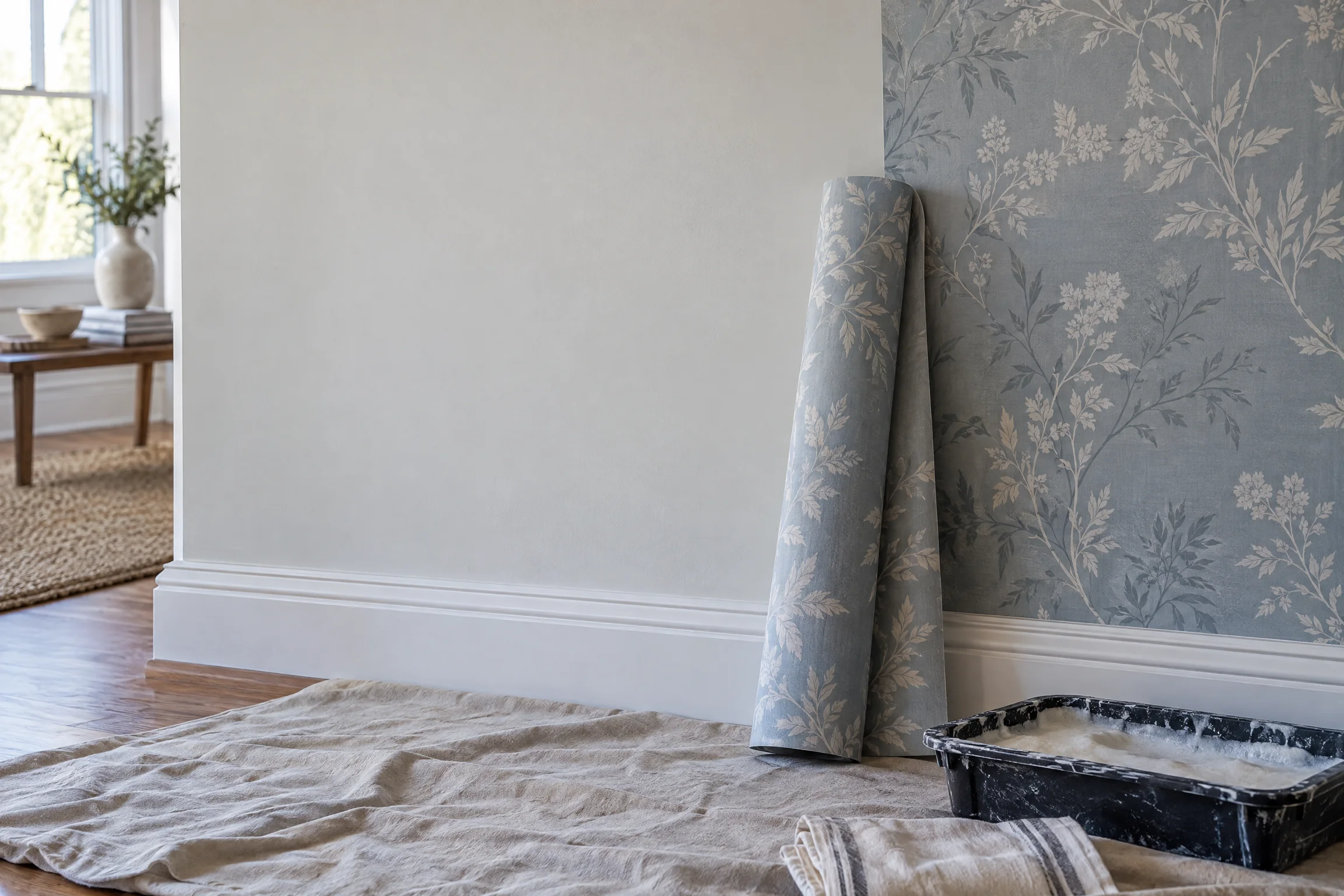
Small details, visible result
Large patterns need a plan for where motifs land. At an inside corner, the pattern may not continue perfectly level from one wall to the next because walls are rarely perfectly square. Seams and edges can also respond differently to the substrate and adhesive.
Knowing these considerations helps set realistic expectations and makes the estimate conversation more useful. It is fine to begin with a phone call and a general idea.
Explore the wallpaper guide ↗No finished plan required
Call about a material, a room, a repair, or whether wallpaper could work on your wall.