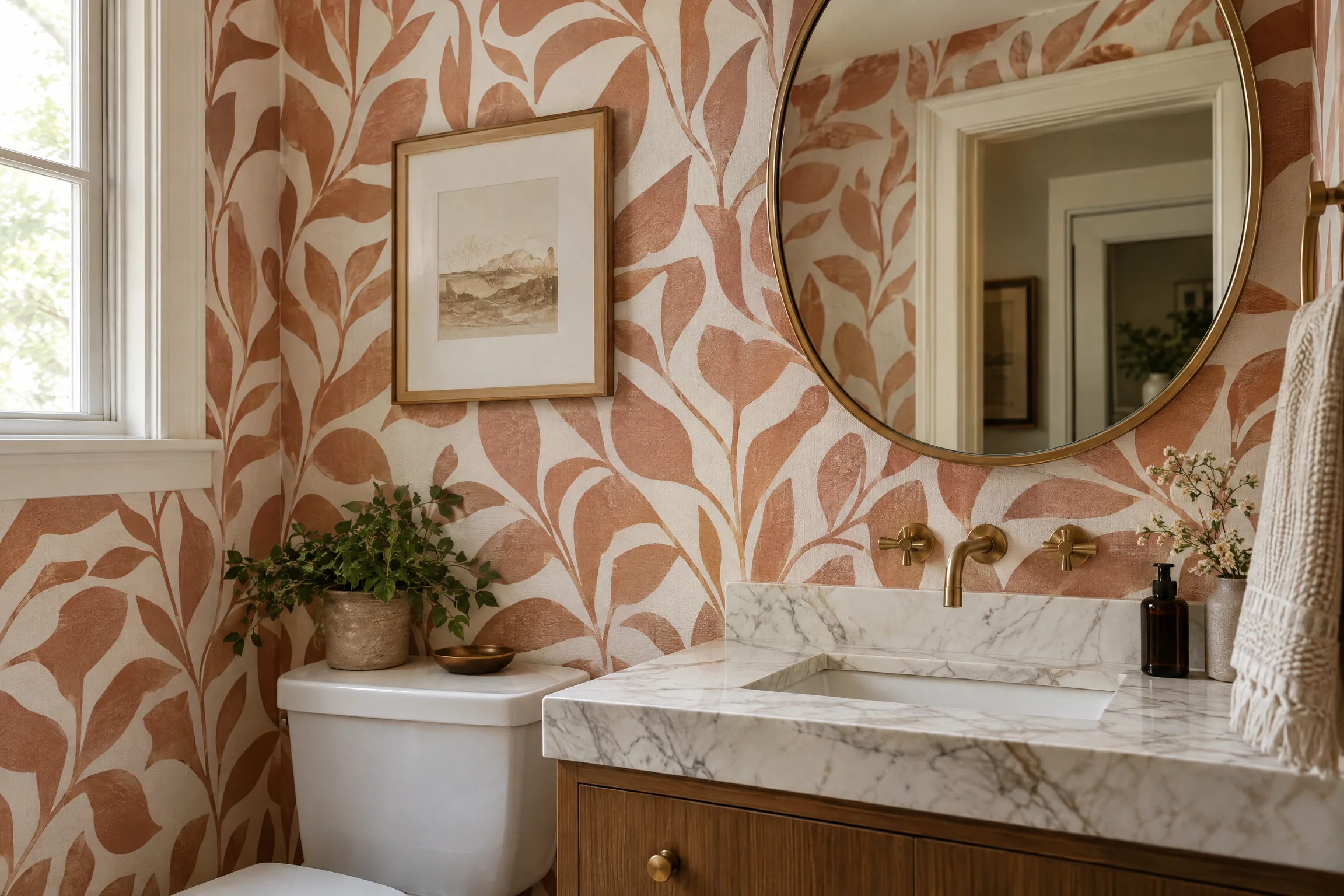
01 / Material
Peel-and-stick or traditional wallpaper?
Peel-and-stick wallpaper has an adhesive backing. Its success depends in part on a clean, smooth, compatible surface and careful placement. Wall texture, dust, fresh paint, or a difficult corner can affect adhesion and alignment.
Traditional wallcoverings are installed with the adhesive method specified for that product and surface. Some papers are pre-pasted; others require paste. Specialty materials such as grasscloth, foil, fabric, or murals can have distinct handling requirements. Manufacturer instructions are the best starting point for product-specific guidance.
If you have not chosen a paper yet, you can still call. A sample, product name, or link may help discuss suitability, but none is required to start a conversation.
02 / Surface
Why does wall preparation matter?
Unevenness, old adhesive, loose paint, existing wallcovering, and pronounced texture can show through or interfere with adhesion. The wall’s condition helps determine whether smoothing, repairs, removal, or a suitable primer should be considered before installation.
Freshly painted walls may need adequate curing time, and the wallcovering manufacturer may specify a particular primer or substrate. Avoid assuming every wall needs the same treatment; the right preparation depends on what is there and what will go on it.
03 / Layout
What makes pattern matching more involved?
A pattern repeat describes how far the design travels before it starts again. A larger repeat can affect how much material is needed and where motifs fall around a room. A mural may also arrive as panels that need to be installed in sequence.
Doors, windows, outside corners, and the room’s focal point influence the starting position. Corners are seldom perfectly square, so a pattern may need to be handled thoughtfully as it turns. Ask the supplier about the roll or panel instructions and keep them available.
04 / Estimate
What information is useful?
Room or wall dimensions, wall height, the type of wallpaper, surface condition, removal needs, and the project city can help describe a request. These details are optional aids, not prerequisites to calling or sending an initial inquiry.
If you do not have measurements or product details, simply explain the room and your idea. You can ask whether an on-site consultation, wall inspection, or measurement visit may be arranged; availability is subject to confirmation.
05 / Quick answers
Questions people often ask.
Can wallpaper go over textured walls?
It depends on the texture, material, and desired finish. Texture can remain visible beneath some wallcoverings, so surface suitability and preparation should be discussed before installation.
How do I estimate the amount of wallpaper?
Wall width and height provide a starting point, but repeat size, panel sequence, openings, and layout can affect material needs. Follow the supplier’s instructions and allow the installer to discuss the scope.
Can a damaged seam be repaired?
Sometimes. Repair depends on the wallpaper condition, the source of the lifting or damage, and whether compatible material is available. Describe the issue when you call; photos are optional.
Do I need to know the wallpaper brand before calling?
No. If you have the product name or instructions, they can help. If you are still deciding, a general conversation is still a useful first step.
Can I call before I know my wall measurements?
Yes. You can call with only a room or project idea. The business can explain what details may help and whether an on-site assessment or measurements can be discussed for your project.
Have a wallpaper question?
Call or send an initial estimate request—no detailed project brief required.
(754) 343-2150